
If you’re standing in your yard looking up at your cottonwood and wondering whether it’s dead or just going through a rough patch, you’re not alone. Cottonwoods grow fast and unfortunately decline just as quickly once something goes wrong. A dead cottonwood tree isn’t always obvious at first glance, since some branches can hold onto brittle leaves or loose bark long after the tree has stopped functioning. Below are the clearest signs your cottonwood has died, along with what to do next and when it’s time to call a professional for removal.
Fast Fact
Colorado State University Extension recognizes cottonwoods as especially at risk of storm and wildfire damage, since their wood decays quickly once stressed and limbs can break away with little warning, as noted by Fielding Tree Care, citing CSU Extension guidance. Catching the warning signs early keeps your family and property safer.
What Causes a Cottonwood Tree to Die?
Cottonwoods are fast growers, which also makes them fast decliners compared to slower, denser hardwoods. Drought stress, saturated soil, root rot, storm damage, and fungal cankers are among the most common culprits behind a dying cottonwood tree. Urban cottonwoods face added strain from construction damage and limited root space, which shortens their natural lifespan. A healthy cottonwood can live for decades, but one under chronic stress can go from thinning canopy to complete dieback in a season or two.
Signs You May Have a Dead Cottonwood Tree
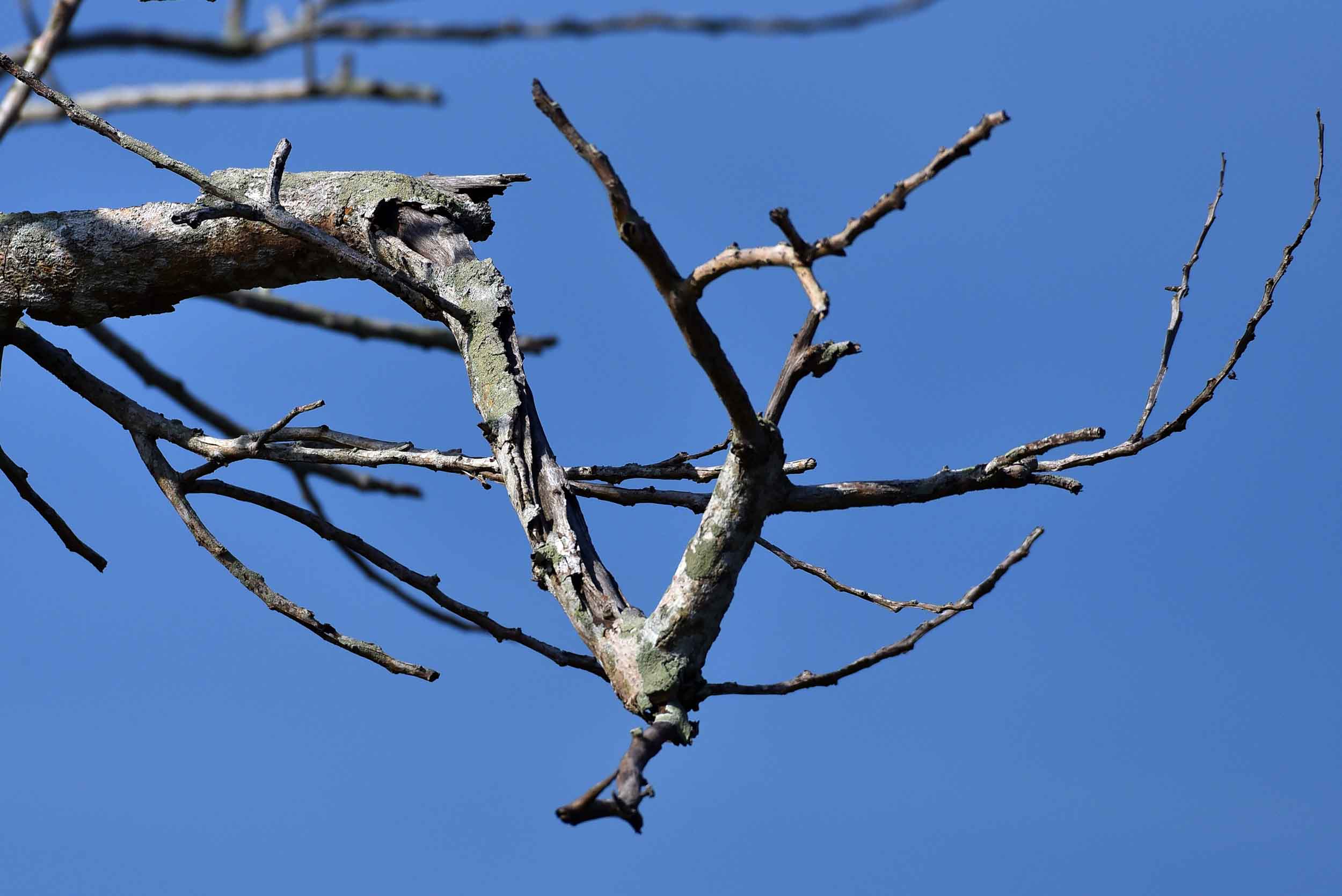
Before a cottonwood is fully gone, it usually gives off warning signals. Spotting these signs early on can be the difference between saving a tree and needing to bite the bullet for a full removal.
1. Bark That’s Cracking, Peeling, or Missing
Healthy bark stays firmly attached and flexible. When large sheets peel away or deep vertical cracks expose the wood underneath, it’s often a sign the tree can no longer transport water and nutrients properly.
2. No New Leaf Growth in Spring
One of the most reliable indicators of a dead cottonwood tree is a lack of buds or leaves once neighboring trees have fully leafed out. A tree that stays bare into late spring has likely lost most of its living tissue.
3. Brittle Branches That Snap Easily
Give a small branch a gentle bend. Living wood flexes before breaking, while dead wood snaps cleanly and feels dry. Widespread brittleness throughout the canopy points toward advanced decline.
4. Mushrooms or Fungal Growth at the Base
Shelf fungus, mushrooms, or soft, spongy patches at the trunk base usually mean internal decay has set in. This kind of decay weakens the structural core and often can’t be reversed with treatment.
5. A Sudden Lean or Exposed Roots
A tree that has begun leaning more than usual, or one showing heaved or exposed roots, may have compromised root support. Combined with saturated soil, this can lead to sudden failure, even on a calm day.
6. Large Sections of Bare, Dead Wood in the Canopy
Some deadwood is normal, but when most of the upper canopy is bare, brittle, and stripped of bark, the tree has likely passed the point of recovery. At this stage, a dead cottonwood tree becomes more of a hazard than a landscape feature.
7. The Scratch Test Reveals Dry, Brown Wood
If you’re still unsure, a simple scratch test can help confirm what you’re seeing above ground.
How to Do the Scratch Test
- Choose a small twig or low branch and gently scrape away a bit of the outer bark with a fingernail or pocketknife.
- Look at the color underneath. Moist, greenish wood generally means that section is still alive.
- Check dry, brown, and brittle wood in several spots. If most areas come back dry and brown, it confirms you’re likely dealing with a dead cottonwood tree rather than one that’s simply dormant.
When a Cottonwood Can Be Saved vs. When Removal Is Necessary
A tree showing one or two of the signs above, especially during a stressful stretch of heat or drought, may still bounce back with deep watering, mulching, and a round of corrective pruning. A tree showing several signs at once, particularly base decay, widespread deadwood, or a new lean, is a different story. At that point, a dead cottonwood tree only becomes more hazardous with time, as weakened limbs and an unstable trunk raise the risk of a fall during wind or storms.
Take a cottonwood that still has some green leaves near the top, but large limbs are breaking off during wind events. An inspection often reveals the trunk has already decayed from the inside out, even though the upper canopy hasn’t fully browned. When that kind of internal decay is present, safe, complete removal is usually the only responsible option.
When to Call a Professional for Cottonwood Tree Removal
Removing a large, dying tree is not a project for a homeowner with a ladder and a chainsaw. Cottonwoods in Colorado can grow up to 100 feet tall, and a compromised trunk can shift unpredictably mid-cut. Add nearby structures, fences, or power lines, and the margin for error shrinks fast. Professional cottonwood tree removal involves proper rigging, directional felling, and stump grinding, so the job gets done without putting your home or family at risk.
TreeCuts has been family-owned and operated in the Denver Metro Area for more than 15 years, offering tree removal, trimming, pruning, stump removal, lot clearing, and storm damage cleanup. Our crews show up on time and follow safety protocols from the first cut to the final cleanup.
Ready to Remove Your Dead Cottonwood Tree?
If you’ve spotted several of the signs above, it’s worth getting a professional opinion before the next storm rolls through. A dead cottonwood tree won’t get safer by waiting, and an experienced crew can tell you quickly whether removal is truly needed. Contact TreeCuts today at (303) 731-1390 for a free estimate, and let our team handle the heavy, dangerous work so you don’t have to.