
If you’ve ever looked up at a massive tree and wondered how it could come down without landing on your roof, you’re not alone. A crane tree removal service is often the answer you’re looking for! A crane supports each section of the tree while an arborist cuts it free, then gently lowers the wood to an open spot away from your home, fences, and garden. Arborists usually suggest this approach for very large or damaged trees growing close to structures.
Below, we’ll walk you through what the process looks like, when it makes sense, and how to find a crew you can trust.
What Is a Crane Tree Removal Service?
Every tree removal begins with a simple question: where will the wood go once it’s cut? The answer depends on how much open space surrounds the tree and what sits beneath it. A crane tree removal service is one of three approaches arborists rely on, and knowing a bit about each can make conversations with your tree care team feel a lot less intimidating.
Three Common Tree Removal Methods
Here’s a friendly overview of your options:
- Felling: The crew cuts the tree at its base and lets it fall in one piece. This method needs a clear landing zone longer than the tree is tall, which most city lots don’t have.
- Rigging and lowering: A climber cuts the tree into sections, and the ground crew lowers each piece with ropes and friction devices. It works well for many backyard trees, and crews keep a close eye on how much weight each section places on the tree and rigging.
- Crane-assisted removal: A crane holds each section before the cut and lifts it clear of your property. It’s especially helpful for very large trees, decayed wood, and trees growing over roofs.
Trees in decline can be tricky to rig, since weakened wood may not hold rope anchor points as reliably as healthy wood. For example, if you’ve been keeping an eye on a dead cottonwood tree, you’ve likely noticed how big these Colorado natives can get, and their wood tends to turn brittle as the tree declines.
How Crane-Assisted Tree Removal Works
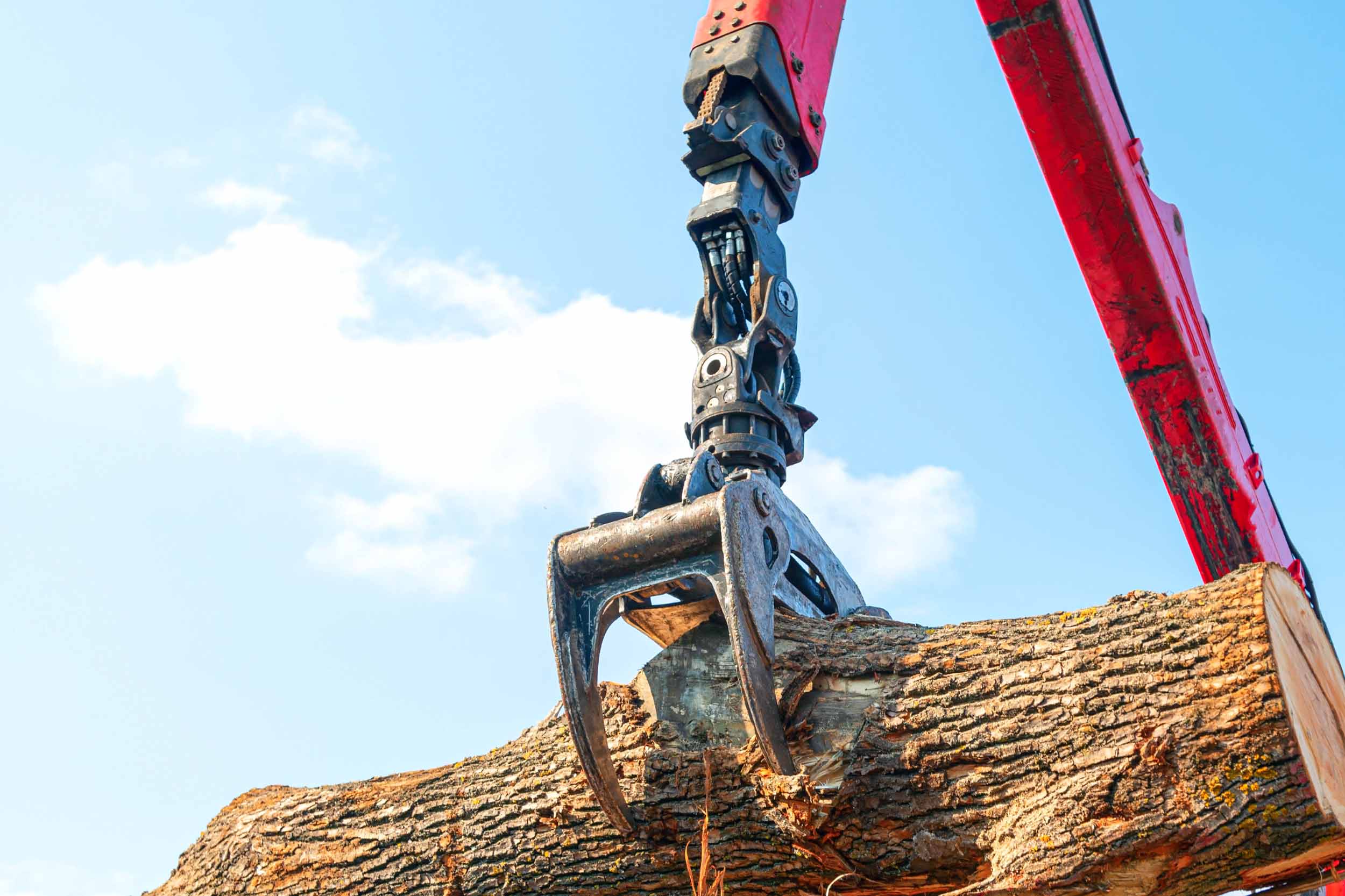
It can be reassuring to know that a crane tree removal service is a carefully coordinated team effort. A crane operator, a climber or bucket operator in the tree, and a ground crew stay in touch by radio or hand signals the whole time, since the operator often can’t see the cut being made.
A Typical Removal Day
Most crane removals follow a sequence similar to this one:
- Assess the tree, nearby power lines, and the ground where the crane will sit
- Set the crane’s outriggers on mats to spread its weight and protect pavement or turf
- Attach a sling to the section before any cut is made
- Cut the section free while the crane supports its weight
- Lift the piece to a landing zone for chipping or hauling
Why Section Weight Matters
A crane can lift less weight the farther its boom reaches from the truck. Experienced crews estimate the weight of each piece ahead of time and size their cuts to stay within the crane’s load chart at that distance. A single trunk section from a mature tree can weigh several thousand pounds, so this careful planning plays a big role in keeping your property safe. Power lines call for extra care, too. The ANSI Z133 safety standard for tree care devotes an entire section to electrical hazards. The newest edition also covers knuckle-boom grapple saws, a type of crane that can grip and cut a section in one smooth motion.
When Does a Tree Need a Crane Tree Removal Service?
It’s completely normal to feel unsure about whether your tree needs a crane. We get it – it seems a bit extreme.
An arborist will look at its size, health, and surroundings before making a recommendation. You might need a crane tree removal service if a tree leans over your house, has a split or hollow trunk, grows in a fenced yard with no equipment access, or
is too heavy to lower by rope. Colorado weather plays a part as well. Heavy spring snow and strong Front Range winds put extra stress on trees with dead limbs, cracks, or decay, so reaching out for an assessment early gives you more time and peace of mind.
Residential Tree Removal Situations
Many older Denver neighborhoods have cozy backyards, detached garages, and alleys too narrow for large equipment. In spots like these, a crane parked on the street can reach over the house to the tree, keeping your lawn and garden beds out of harm’s way. Our residential tree services in Denver often include this kind of over-the-roof removal, and we treat every yard with the care we’d want for our own.
Commercial Tree Removal Considerations
For property managers, HOAs, and business owners, the biggest concerns usually center on safety and keeping the site welcoming. A crane shortens the time a work zone blocks parking lots, walkways, or entrances, which means less disruption for tenants and customers. A removal can also be a good moment to check on neighboring trees, and commercial tree pruning services can help reduce future hazards.
How to Choose a Crane Tree Removal Service
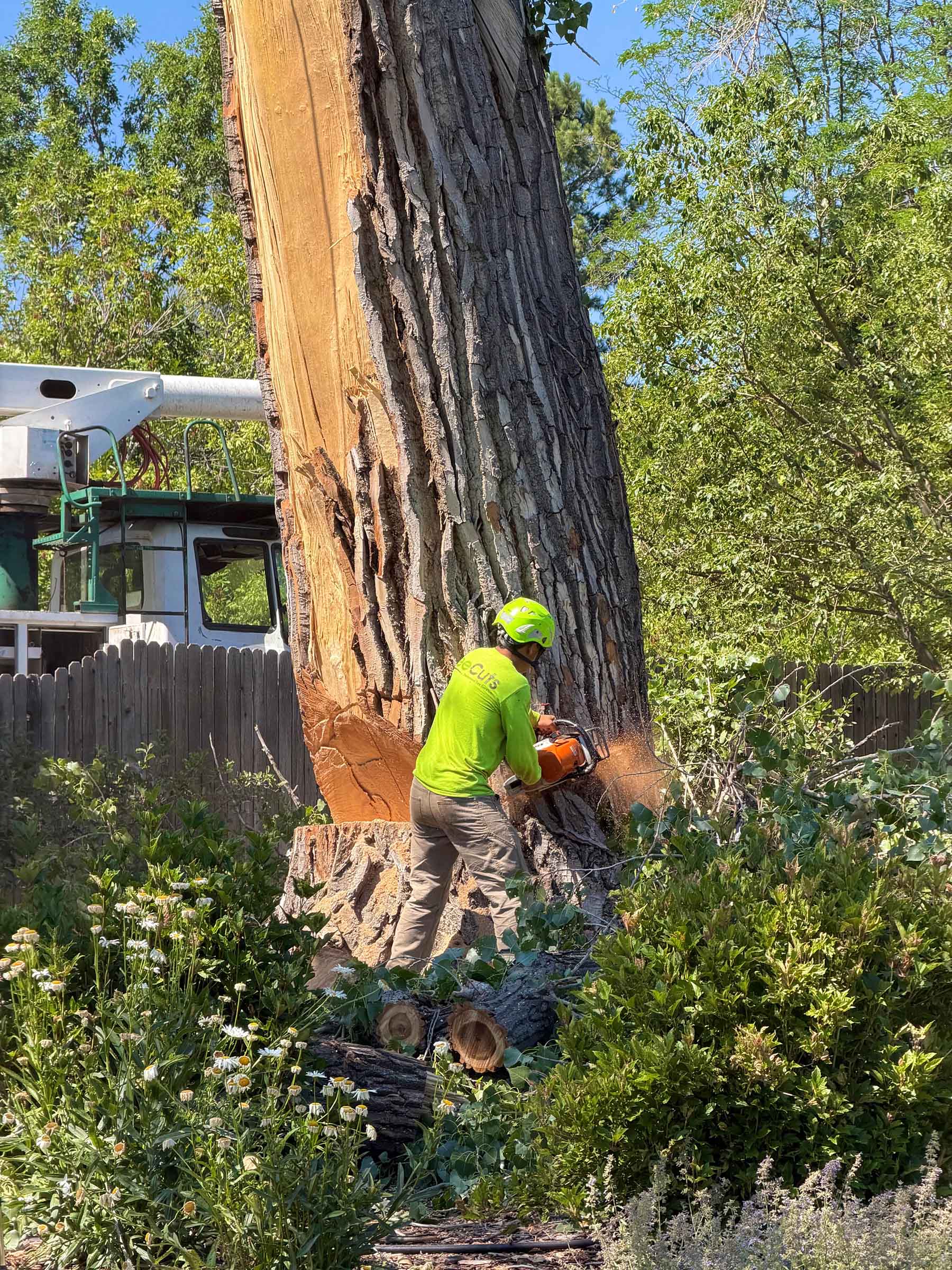
Inviting a crew and a crane onto your property takes trust, so it helps to know what to look for. Denver’s municipal code requires anyone who prunes or removes trees to be licensed as a tree service company, and you can check any company against the city’s licensed contractor list in just a few minutes.
It’s also a good idea to ask for proof of insurance, whether the crew includes ISA-credentialed arborists, and how they follow the ANSI Z133 standard. The Tree Care Industry Association notes the standard carries the force of law in many situations across the U.S., even though compliance is voluntary. A reputable crane tree removal service will be glad to answer these questions. As a family-owned local tree service in Denver, TreeCuts keeps its licenses current, includes ISA members on the team, and welcomes every question you bring.
Preparing Your Property for Crane-Assisted Removal
A little preparation helps removal day feel calm and simple. Move vehicles away from the driveway and street, bring pets inside, and give neighbors a friendly heads-up if the
crane will sit near a shared alley or property line. If the crane needs space on a public street, ask your crane tree removal service whether your city requires a permit.
Making the Right Call for Your Trees
Deciding to remove a large tree can feel like a big step, especially when it’s been part of your property for years. If a tree on your property is showing signs of decline, a visit from a licensed arborist is a thoughtful place to start. Whenever you’re ready, our team offers tree removal in Denver with careful planning and a thorough cleanup. Reach out to us here–we’d love to help you decide whether a crane tree removal service is the right fit for your home or business.